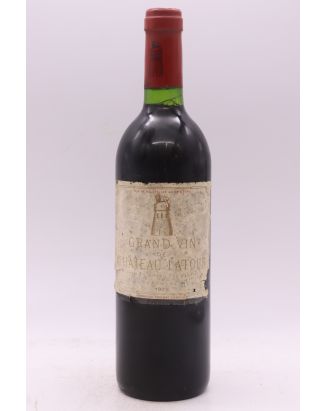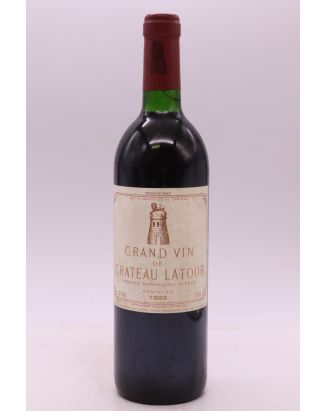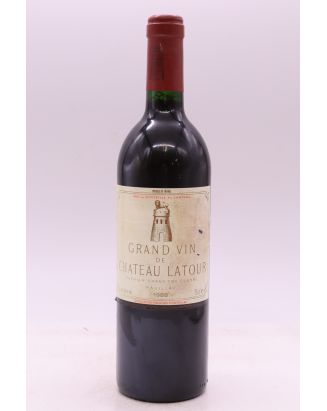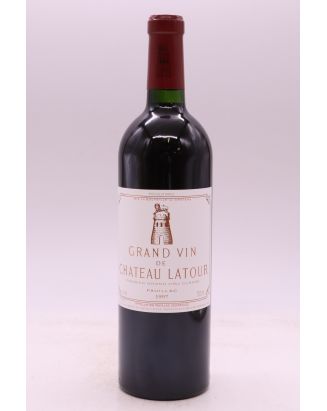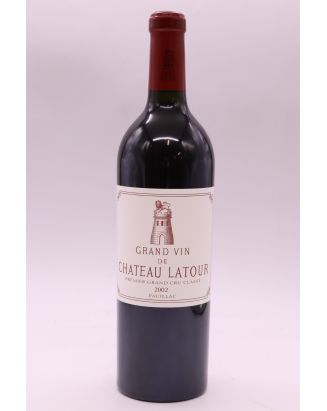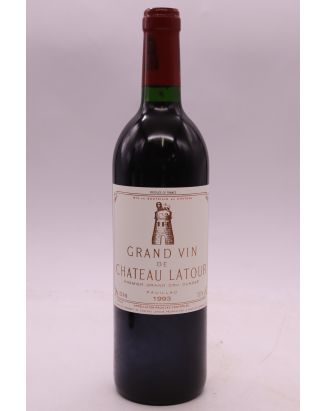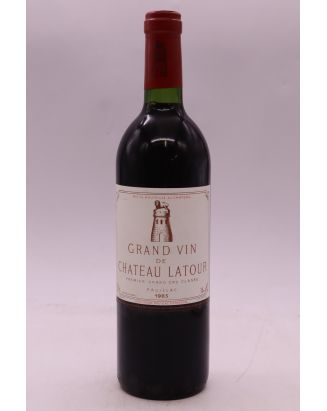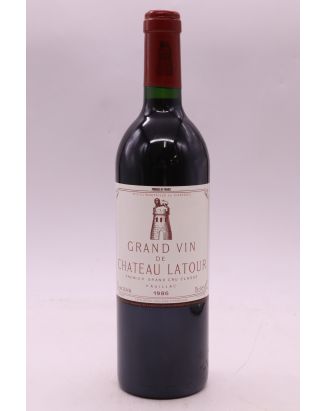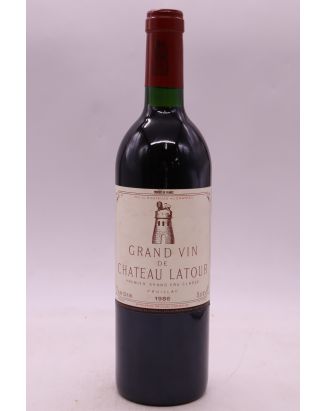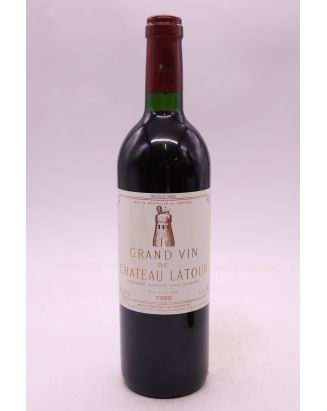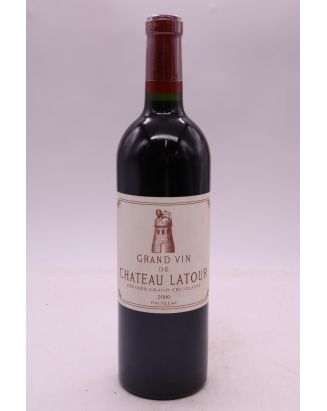
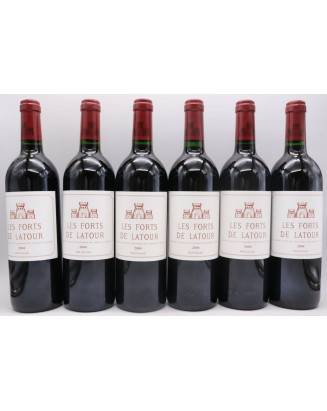
Latour 1979 -10% DISCOUNT !
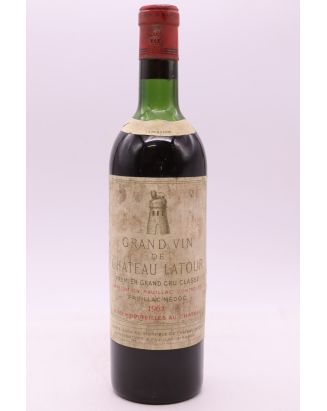
Latour 1962 -10% DISCOUNT !
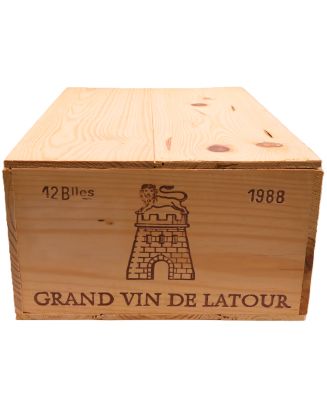
Latour 1988 -5% DISCOUNT !
Château Latour benefits from an exceptional terroir located in Pauillac, in the Médoc, with deep gravels that provide perfect drainage and a great capacity to store heat. Classified as a Premier Grand Cru Classé since 1855, the estate produces wines of remarkable concentration and complexity, dominated by Cabernet Sauvignon. Their powerful tannic structure, exceptional ageing potential and consistency vintage after vintage make them an absolute reference for lovers of great Bordeaux wines.
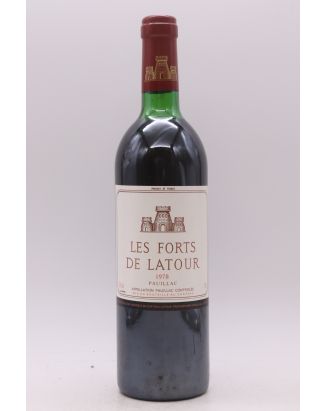
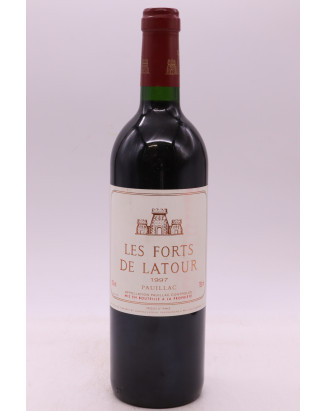
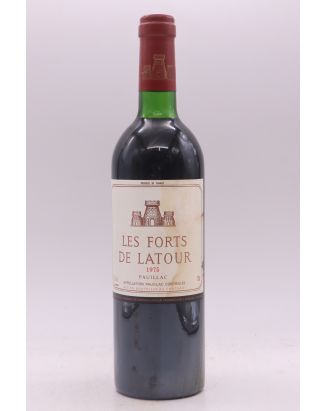
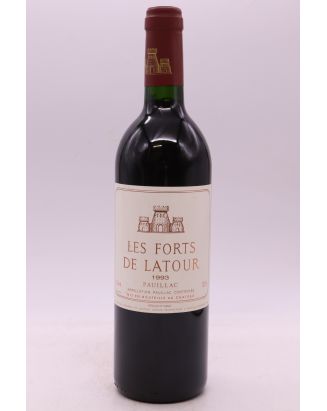
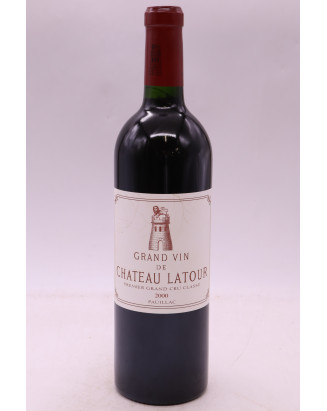
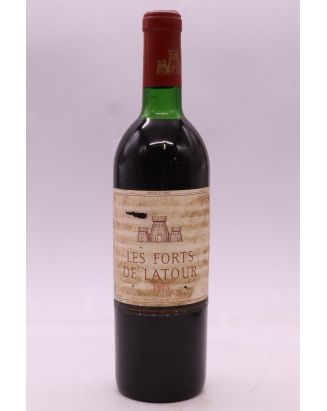
Château Latour produces several wines from its vineyard. The Grand Vin is crafted exclusively from the finest plots of the Enclos, the historic heart of the estate, and represents the most concentrated and complex expression of the Pauillac terroir. Les Forts de Latour, the château's second wine, comes from young vines and satellite plots. It offers excellent accessibility while retaining the Latour signature: solid structure, generous fruit and good ageing potential, at a more affordable price point.
The wines of Château Latour, with their assertive tannic structure and aromas of blackcurrant, cedar and truffle, call for dishes worthy of their complexity. Noble red meats — beef tenderloin en croûte, aged prime rib or roasted milk-fed lamb — make for classic, timeless pairings. Game birds such as pigeon or woodcock also harmonise beautifully. For older vintages, with their melted tannins and developed tertiary bouquet, a selection of aged cheeses, such as a well-matured Comté or a Brie de Meaux, can reveal some wonderful surprises.
Among the legendary vintages of Château Latour, several decades stand out in particular. The years 1961, 1982 and 2000 are unanimously recognised as the pinnacle of the estate's production, combining power, balance and an exceptional longevity. The vintages 1970, 1986 and 1990 also deserve the full attention of enthusiasts, offering a typical expression of the Latour style: structured, deep and of an austere elegance that reveals itself fully with time.
Given the characteristic tannic power of Château Latour wines, careful aeration is essential. For relatively young vintages (1990 to 2010), it is advisable to decant the wine at least 2 to 3 hours before serving, or even longer. The ideal serving temperature is between 16 and 18°C. For older vintages (1950–1970), opt for a gentle and brief decantation, remaining vigilant about sediment. A wide-mouthed Bordeaux-style glass will allow the complex bouquet to fully express itself.
Château Latour is one of the Bordeaux wines requiring the most patience. In great vintages, it is generally recommended to wait at least 15 to 20 years before opening a bottle of the Grand Vin. Vintages such as 1982 or 2000 began to reveal their full complexity after two decades in the cellar, while still retaining additional ageing potential. Les Forts de Latour, more approachable, can be enjoyed after 8 to 12 years. A cellar at a constant temperature of around 12°C, with adequate humidity, is essential to support this serene ageing process.
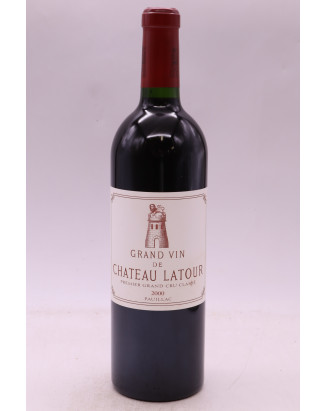
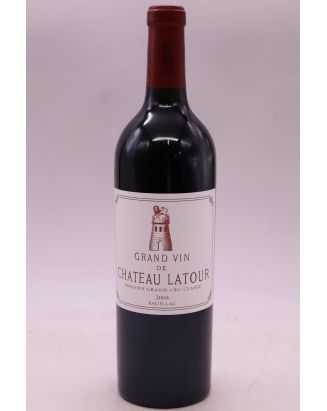
The history of Château Latour begins in 1331, when Gaucelme de Castillon obtained authorisation to build a fortified tower in the parish of Saint-Maubert, near the Gironde estuary. Mentioned in the Chronicles of Jean Froissart in 1378, the "Tour de Saint-Maubert" played a strategic role during the Hundred Years' War, protecting the estuary from Anglo-Gascon assaults. Although this original tower has since disappeared, a round tower, erected around 1620, has become the emblem of the estate, depicted on the label of the bottles.
From the end of the 16th century, the estate produced wine in sufficient quantities to meet local needs, but it was from the 18th century, under the stewardship of the de Ségur family, that Château Latour entered a new era. Alexandre de Ségur, followed by his son Nicolas-Alexandre, nicknamed the "Prince of Vines" by Louis XV, elevated the estate to the ranks of the greatest. Also owners of Château Lafite and Château Mouton, the Ségurs left their mark on Bordeaux's viticultural history. From 1714, the wines of Château Latour were exported to the United Kingdom, where a refined aristocracy embraced them, driving their prices far beyond those of ordinary Bordeaux wines.
In the 19th century, despite the upheavals of the French Revolution, the estate preserved its integrity and remained in the hands of the Ségur descendants. In 1842, a Société Civile was created to manage the property, a structure that endured until 1962. This period saw Château Latour emerge as one of the five Premiers Grands Crus Classés of 1855, alongside Château Lafite Rothschild, Château Margaux, Château Haut-Brion and, later, Château Mouton Rothschild. Between 1962 and 1993, British investors, such as Pearson and Harveys of Bristol, took majority control, modernising the facilities and replanting the vineyard. In 1993, François Pinault acquired the majority of shares through his holding company Artémis, marking the beginning of a pursuit of excellence under the direction of Frédéric Engerer, president since 1998. This period was marked by massive investment, including the renovation of the cellars between 1999 and 2003, and the adoption of biodynamic and organic practices, reinforcing the worldwide reputation of Château Latour.
The vineyard of Château Latour, spanning 96.5 hectares, is a model of exceptional terroir. At the heart of this estate lies the Enclos, a 47-hectare walled plot situated close to the château, reserved exclusively for the production of the fine wine of Château Latour. This unique terroir, dominating the Gironde estuary from 12 to 16 metres, benefits from a remarkable geology: Günzian gravels at the surface, mixed with pebbles and stones, rest on a clay and marl subsoil. This combination provides optimal drainage and regulated water supply, essential for the vine, even in extreme vintages such as 2003 or 2010.
The Enclos is divided into two main soil families: clayey gravels at the centre, where Cabernet Sauvignon expresses its full power, and gravelly sands on the periphery, ideal for Merlot. The estate's grape varieties comprise 76% Cabernet Sauvignon, 22% Merlot and 2% Petit Verdot, with Cabernet Franc having been progressively excluded from the Grand Vin since 2017. The high planting density of 10,000 vines per hectare encourages a limited but exceptionally high-quality yield, with each vine drawing deeply from the clay subsoil to produce concentrated and structured grapes.
Since 2008, Château Latour has adopted environmentally responsible practices. The introduction of horses to plough the soils reduces compaction and preserves the vitality of the vines. In 2015, the entire vineyard obtained organic farming certification from ECOCERT, and the 47 hectares of the Enclos are managed using biodynamic methods, though without official certification. These practices, combined with ancestral drainage dating back to the 19th century, help preserve the singularity of the terroir and produce wines of unparalleled purity and complexity.
Vinification at Château Latour is a model of precision and rigour, combining tradition with cutting-edge technology. Harvesting, carried out manually in 8 kg crates to preserve the integrity of the berries, generally begins in mid-September and extends through to mid-October. Each parcel is harvested at its optimal ripeness, determined by analyses, berry tastings and weather forecasts.
Upon arrival at the winery, the grapes are destemmed and crushed, then sorted in two stages to eliminate any vegetal matter or imperfect berries. They are then directed by gravity into one of 80 temperature-controlled stainless steel vats, ranging in size from 12 to 164 hectolitres. This diversity allows for precise parcel-by-parcel vinification, based on grape variety, vine age and soil characteristics. Alcoholic fermentation lasts approximately three weeks, during which the richness of the grapes is carefully extracted.
After draining, which separates the wine from the marc, malolactic fermentation takes place in vats or barrels, lending the wine roundness and suppleness. The marc is pressed separately to produce a press wine, aged apart while awaiting blending. From January onwards, Frédéric Engerer, supported by oenologist Éric Boissenot, tastes each batch to compose the Grand Vin, Les Forts de Latour and the Pauillac de Latour. The Grand Vin is aged exclusively in new French oak barrels sourced from forests in central France. During the first months, the barrels, sealed with a glass bung, encourage subtle gas exchanges. Twice-daily topping up compensates for absorption and evaporation.
Before summer, the barrels are transferred to the second-year cellar for ageing of 10 to 13 months, sheltered from temperature variations. A clarification using egg white, followed by a final racking, refines the wine. Bottling, decided by tasting, takes place when the wine reaches a perfect balance between finesse and structure, generally in mid-June. Since 2012, Château Latour has kept its wines in bottle at the estate, releasing them for sale only when they are ready to drink: 8 to 10 years for the Grand Vin, 6 to 8 years for Les Forts de Latour and 4 to 6 years for the Pauillac de Latour.
"Fine Wine of Château Latour"
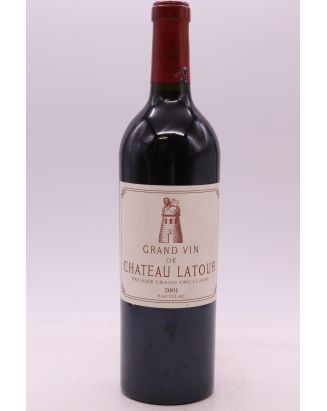
The fine wine of Château Latour, produced exclusively from the old vines of the Enclos, is a monument of Bordeaux oenology. Composed of 90% Cabernet Sauvignon and 10% Merlot, with occasionally a touch of Petit Verdot, it embodies the quintessence of Pauillac. Its nose, deep and complex, reveals aromas of dark fruits, noble wood, gentle spices and tobacco. On the palate, it offers firm yet elegant tannins, a full-bodied structure and exceptional length. This wine of very long ageing potential, capable of developing for more than 30 years, reaches its peak after 15 to 60 years. With an average annual production of 100,000 bottles (30 to 35% of total production), it is highly sought after by collectors and enthusiasts of Château Latour wine.
Les Forts de Latour
Les Forts de Latour, the estate's second wine, is crafted from younger vines of the Enclos and from outlying parcels such as Petit Batailley or Pinada. With approximately 70% Cabernet Sauvignon and 30% Merlot, it is aged for 18 months in barrels, of which 50% are new. This wine, rivalling many classified growths, offers remarkable elegance and depth, with fruity and spicy notes. Produced at approximately 150,000 bottles per year, it is accessible earlier than the Grand Vin, while retaining excellent ageing potential.
Pauillac de Latour
The Pauillac de Latour, the estate's third wine, is produced from the young vines of the outlying parcels. Introduced in 1965 and produced regularly since 1990, it charms with its accessibility and freshness. Less complex than its elder siblings, it remains an excellent ambassador of the Pauillac appellation, ideal for early drinking.
Château Latour, an icon of Pauillac, has captivated Robert Parker with exceptional vintages scored 100/100, notably 1899, 1949, 1961, 1982, 2003, 2009, 2010, 2016 and 2018. The years 2019 and 2020, with an impressive score of 99/100, confirm the consistency of this legendary estate. The vintages 1959 and 2005, rated 98/100, also illustrate the exceptional quality and longevity of Château Latour wines, true references in the world of Bordeaux grands crus.
Pauillac, the flagship appellation of the Médoc, is celebrated for its red wines of unparalleled elegance and power. Among the historic vintages, 1975, 1982, 1985, 1986, 1989 and 1990 stand out for their aromatic complexity and remarkable ageing potential. The years 1995, 1996, 2000, 2003 and 2005 shine for their intensity and balance. More recently, the vintages 2008, 2009, 2010, 2012, 2014, 2015, 2016, 2017, 2018, 2019 and 2020 have consolidated Pauillac's reputation, offering structured, refined wines perfectly suited to extended ageing.
Immerse yourself in the refined world of the Premiers Grands Crus Classés, consecrated by the 1855 classification, which represent the pinnacle of Bordeaux wines. In Pauillac, Château Latour, Château Lafite-Rothschild and Château Mouton Rothschild elevate Cabernet Sauvignon, producing red wines of robust structure, captivating complexity and exceptional ageing potential. In Margaux, Château Margaux enchants with its finesse and delicate aromas, embodying unrivalled sophistication. In Pessac-Léognan, Château Haut-Brion expresses the singularity of its gravelly terroir, combining power and elegance. Finally, Château d'Yquem, the treasure of Sauternes, excels with its sweet wines of remarkable richness and longevity, ideal for lovers of exceptional dessert wines. Discover our selection of Premiers Grands Crus Classés for a unique wine experience!
Château Latour is a symbol of Bordeaux excellence. Its exceptional terroir, centuries-long history and commitment to organic and biodynamic practices make it a truly unique estate. Whether you are looking for a Château Latour 1982, a recent vintage such as the Château Latour 2016, or a rare bottle to enrich your cellar, our online store offers an exclusive selection to meet your expectations. With wines recognised for their consistency, even in difficult vintages, Château Latour guarantees unforgettable experiences with every tasting. Explore our collection and let yourself be seduced by the timeless elegance of this Premier Grand Cru Classé at the best price!
COLLECTION NEAR PARIS & VAT REFUND FOR TOURISTS
Free collection in our warehouse near central Paris (92)