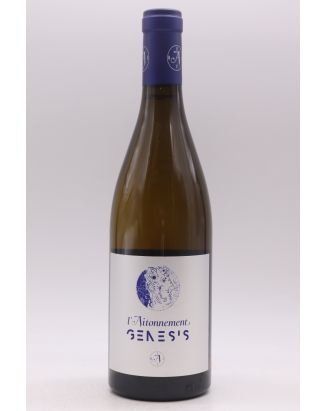
L'Aitonnement Jacquère Genesis 2021
Personalise your experience
Change your country, language and currency here whenever you wish.
|
|
|
Must-See Châteaux |
|
|
|
|
|
|
A magnificent Savoyard estate: hyped and discreet!
The Domaine de l'Aitonnement, located in Savoie, has a rich history, an exceptional terroir and produces unique wines. Here is an overview of these different aspects:
The Aiton vineyard in the heart of Savoie has existed for at least 400 years, recognized for the quality of its Mondeuse noire. Despite its reduction to just a few hectares today, it is worked with passion and commitment. The estate of Aitonnement began in 2016, when Bernard and Marido Bachellier-Gauthier, a retired winemaking couple from the Domaine du Sartos du Bec, passed the torch. This project represents the culmination of a winemaker's life, with deep respect for previous generations. Maxime Dancoine is now at the head of this estate! Very talented, he now produces fine and precise biodynamic wines in order to put Savoie wines in the spotlight.
The Aiton vineyard is located on the western tip of the Maurienne Massif, benefiting from south-facing slopes and gray and schistose marl soils ideal for vine cultivation. Worked in organic agriculture and respecting the principles of biodynamics, the vines are maintained in a privileged ecosystem, promoting biodiversity and resilience to climate change. The estate cultivates a great diversity of grape varieties, including Mondeuse noire, Jacquère, and Altesse. Vinification techniques are meticulous, with particular attention paid to each stage, from grape harvest to bottling: Maxime Dancoine brings to it a very special, almost maternal care!
You will discover point by point the characteristics of the estate, from vine to bottle.
A brief geography/geology point
The Aiton vineyard is nestled at the western tip of the Maurienne Massif. One can see the Lauzière Massif and its Grand Arc, the Belledonnes range, as well as the Combe de Savoie which leads to the Chartreuse park. The Aiton vineyard is distinguished by its beautiful south-facing slopes. The wind blows regularly from late morning onwards. The soils, composed of gray and schistose marls, are poor, shallow and well-drained, ideal conditions for the vine.
A (very) old story
The presence of a vineyard in Aiton has been attested for at least 400 years; this vineyard is renowned for the quality of its Mondeuse noire. From its glorious years and its 250 hectares, today only a handful of hectares remain, but these are cultivated with conviction and passion.
A privileged ecosystem
To respect this unique environment, Maxime Dancoine works the vines organically and strives to maintain biodiversity by preserving natural spaces and ecological niches. This allows the vines to better resist the climate changes we must face each year. Another characteristic of the Aiton vineyard is the great diversity of grape varieties it harbors. Around thirty have been counted across the four active estates.
The adventure of the Domaine de l'Aitonnement
The adventure began with a few ares of old Mondeuse noire, young and old white Jacquère, as well as about fifteen-year-old white Altesse. Since then, the Douce noire conservatory, a plot of Persan, old co-planted plots and new plantings have completed the estate, notably a mass selection of Mondeuse noire and Joubertin, to reach a final objective of 2.5 hectares.
Choice of co-planting
The choice of co-planting on the new plots was obvious to Maxime Dancoine to partly face climate change. This is why some plantings include up to nine different white grape varieties, endemic to the region. These include grape varieties such as Blanc de Maurienne, Mondeuse Grise and Blanche, Verdesse, Molette, Gringet, Petite Sainte Marie, Petite Arvine and Bia Blanc.
The foundations
This estate is the project of a winemaker's lifetime, aimed at creating a viable wine operation on a former vineyard now almost disappeared. The Domaine de l'Aitonnement was launched in 2016, with the transfer of 58 ares of vines previously operated respectfully by Bernard and Marido Bachellier-Gauthier, a retired winemaking couple from the Domaine du Sartos du Bec. Maxime Dancoine has deep respect for them and for the winemakers of previous generations who were able to develop, maintain and pass down these beautiful vines on a hillside that is difficult to work.
By the strength of arms and legs
Maxime Dancoine has decided to carefully preserve the old vines that were passed down to him and to maintain the same cultivation techniques. The characteristics of this complex vineyard, with its small plots without access paths, have led him to maintain a very high planting density (over 10,000 vines per hectare), with goblet training and stakes to facilitate work on vines that sometimes have a 100% incline. For these reasons, all tasks in the vineyards, from pruning to trellising, including phytosanitary treatments, soil maintenance and harvesting, are carried out by hand. The vineyard maintains body and mind!
Vinification and aging
Vinification is a crucial moment that concentrates an entire year's efforts. The most important lesson according to Maxime Dancoine is the importance of taking one's time. Even after 40 years of winemaking, Maxime still considers himself a young winemaker. One must remain humble and objectively adapt to the unique conditions of each vintage according to him.
From the arrival of the grapes in the vat to the aging of the wines, all stages are meticulously adjusted to respect the quality of the grapes, musts and wines in the cellar.
This includes:
- Long pressing times for whites (approximately 4 hours) and short for reds, with minimal punching down to avoid excessive extraction.
- Maceration times for reds, adapted to the different grape varieties.
- The choice of varied containers; demi-muids (400-liter barrels), stoneware amphoras, clay, cocciopesto, micro-ceramic, used differently according to the organoleptic characteristics of each vintage and the desired aging direction.
A brief point on sulfur
Sulfur has been and will always be present in his wines, adjusted according to the nature of the wine and its evolution. Several reasons have led him to this choice:
Wine quality: Maxime cannot tolerate the mouse taint that completely masks the aromas on the palate. Producing wines without this defect is possible but very complex, requiring very delicate production and storage conditions that he is not yet able to achieve.
Wine storage: Some of his wines travel many kilometers under storage conditions that are not always ideal. Sulfur, even in small quantities, helps compensate for these defects to a certain extent.
Wine aging over time: Maxime hopes to produce wines that age well. Sulfur is a preservative that enables this aging and allows wines to be kept for opening on a special occasion.
Wine preparation
All tasks of transfer, filtration and bottling are carried out, as far as possible, following the lunar calendar, particularly on fruit days during the waning moon. Wine transfers are limited as much as possible and preceded by inerting with neutral gas (carbon dioxide or nitrogen), always at a temperature above 10°C to avoid the use of sulfur.
Wine filtration is not systematic and depends on the turbidity, clarity and stability of the wines. Free SO2 and total SO2 levels are available on the technical sheets of each Aitonnement cuvée.
Filtration and bottling are carried out by OENO CONSEIL / OENO SERVICE, a company based in Apremont, in whom Maxime has confidence and for whom he previously worked as an oenologist. Filtration is done using the Sartorius Jumbo Star system, allowing waste-free filtration at low pressure to preserve the wine's structure. Bottling is performed with a Costral Galaxy-type bottling machine, with systematic cleaning of bottles (new but not clean!) and inerting of empty bottles to further reduce oxygen contact with the wine.
The estate offers a range of expressive cuvées, reflecting the diversity of the terroir and the winemaker's passion. Among the grape varieties cultivated, one finds wines made from Mondeuse noire, Jacquère, Altesse and other varieties endemic to the region. Each bottle embodies the estate's commitment to authenticity and quality.
Discover the Big Bang, Vesta, Jacquère Genesis, and Mondeuse Dark Side cuvées, directly from the estate, on Vinsetmillesimes!
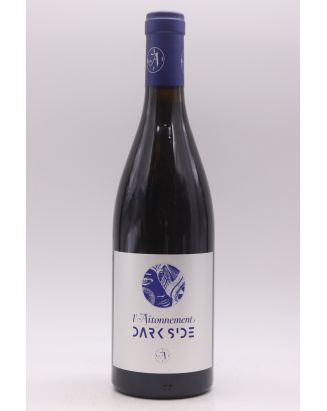
Dark Side: Lovely cuvée that expresses Maxime Dancoine's vision of Mondeuse Noire. Notes of black fruits, pepper and licorice. An aging wine that deserves 2 years of rest in bottle before being fully appreciated!
Solar: The Radiance of Altesse, at the zenith of Alpine grape varieties. An exceptional exposure of the vines allows this cuvée to obtain a lovely minerality, a luminous finesse and a radiant structure!
Genesis: An elegant Jacquère to produce a delicate, fresh wine with lemony and chalky notes that deserves to wait a year or two before revealing its full potential.
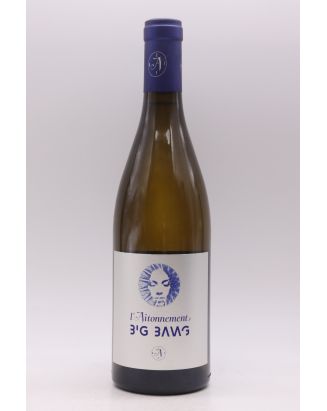
Big Bang: beautiful blend of Altesse, Jacquère, Mondeuse gris and Blanc de Maurienne! Discover the beauty of Savoyard grape varieties! Previously 2, today 4 and soon 10 grape varieties for this cuvée characterized by aromatic complexity, a lovely freshness and a certain salinity.
Beyond the estate of Aitonnement, Savoie is full of renowned wine estates. Among them, one can mention Domaine Belluard, Domaine Blard et Fils, Axel Domont, or the domaine des Ardoisières, all renowned for the quality of their wines and their attachment to the Savoyard terroir.
In summary, the estate of Aitonnement embodies the passion and dedication of Savoyard winemakers, producing exceptional wines that reflect the region's unique identity.
A new trend to discover!
COLLECTION NEAR PARIS & VAT REFUND FOR TOURISTS
Free collection in our warehouse near central Paris (92)