Personalise your experience
Change your country, language and currency here whenever you wish.
|
|
|
Must-See Châteaux |
|
|
|
|
|
|
|
|
A young producer with an ambitious vision for sustainability
A young Champagne producer, Etienne Calsac is based in Avize, in the heart of the Côte des Blancs, where he took over his grandfather’s vineyard in 2010. In just a few years, this vineyard of less than three hectares has become one of the most sought-after names among lovers of grower Champagne. The range includes chalk-driven Blanc de Blancs, cuvées that revive historic grape varieties, and single-vineyard Grand Cru and Premier Cru wines.
Born in Reims, Etienne Calsac spends much of his childhood with his grandparents in Avize. Originally from Grauves, they grow grapes but sell them to the major Champagne houses rather than making wine themselves. After attending a viticultural high school, Etienne makes wine in California, New Zealand and Canada, then in Champagne at Bruno Paillard. In 2010, at age 26, he leases the family vineyards and founds his own estate. He starts from scratch: no winery, equipment or customers.
The early years are demanding. Etienne works alone and still sells some of his grapes to finance his new venture. Success comes quickly, particularly in the United States, which remains his main market today. Committed to mutual support, he founded an association bringing together around twenty Champagne growers. A small team now works alongside him, and the range continues to grow.
The vineyards cover around 2.8 hectares across several parts of Champagne. In the Côte des Blancs, Etienne grows chardonnay in the Avize Grand Cru, home to Clos des Maladries. He also works the Grauves Premier Cru, where his grandfather planted the Les Martinières lieu-dit. In the Grande Vallée de la Marne, the Bisseuil Premier Cru sits on chalk that reaches the surface. The estate also has a plot in Montgenost, in the Côte de Sézanne, and a pinot noir vineyard in Bligny, in the Côte des Bar, taken over in 2018. Since that year, a small quantity of grapes purchased from the family has supplemented the harvest.
The estate’s vineyards have been certified organic since 2020, following a conversion that began in 2018. The soils are grassed and plowed, partly by horse. Etienne digs soil pits to better understand his soils and harvests fully ripe grapes into small crates. He has also replanted forgotten Champagne grape varieties (pinot blanc, petit meslier and arbane), which hold up well in hot years.
Each plot is vinified separately. Fermentation begins spontaneously. Since 2020, it has been carried out using yeasts isolated from the estate’s own musts, preserving the identity of the terroir while ensuring a consistent style. The wines age two-thirds in stainless steel tanks and one-third in older barrels. They are neither fined nor filtered, and sulfur, added only at pressing, remains at very low levels.
For several cuvées, the second fermentation in bottle takes place under a cork rather than a crown cap. This artisanal practice requires hand-corking and hand-disgorging and, according to Etienne, gives the wines a creamier texture. Reserve wines enrich the blends, including a perpetual reserve dedicated to Les Rocheforts since 2012. Dosage remains low: Extra Brut or Brut Nature.
L’Échappée Belle: the estate’s signature cuvée, this Extra Brut blanc de blancs blends chardonnay from the Côte des Blancs, the Côte de Sézanne and the Grande Vallée de la Marne, grown on clay-limestone soils. It is vinified 20% in barrel and the rest in stainless steel, with reserve wines added to the blend. It offers ripe fruit, lovely freshness and distinct minerality. Its label, depicting the stages of a bird’s flight, evokes freedom and the blending of terroirs.
Les Rocheforts: this Premier Cru blanc de blancs comes from a single east-facing plot in Bisseuil, in the Grande Vallée de la Marne, where chalk reaches the surface. It is vinified in equal parts in barrel and stainless steel and draws on its own perpetual reserve. With production of around 3,500 bottles, this is a saline, deep champagne with ripe white-fruit notes, ideal with seafood.
Rose de Craie: this Extra Brut blended rosé is made mainly from chardonnay (around 92%), with a little pinot noir from Vertus. Aged 20% in barrel, it has a pale color and an airy style reminiscent of a blanc de blancs. A saline thread carries delicate notes of red berries.
Clos des Maladries: the jewel of the estate, this vintage Grand Cru comes from a 0.16-hectare walled vineyard. Etienne’s grandfather planted it in the 1970s behind the family home in Avize. South-facing and worked by horse, its grapes are vinified 30% in wood, and the wine is dosed as Brut Nature. Produced at around a thousand bottles a year, it combines power, richness and elegance, with excellent aging potential.
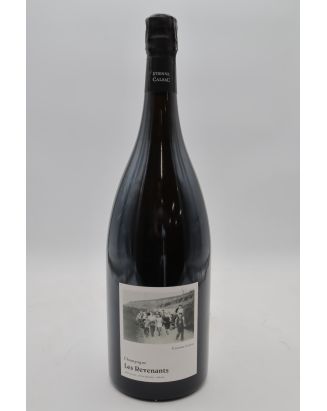
Les Revenants: this rare cuvée revives forgotten Champagne grape varieties planted by Etienne in 2010 on the Les Fours plot in the Côte de Sézanne. It blends pinot blanc (50%), petit meslier (43%) and arbane (7%). Vinified in 600-liter demi-muids, aged under cork and made with very little sulfur, it is round, rich, mineral and saline. Its label pays tribute to the winemaker’s grandmother and to harvesters of the past.
Val l’Hermite: the estate’s only blanc de noirs, this 100% pinot noir comes from the Val l’Hermite lieu-dit in Bligny, in the Côte des Bar. The vines grow on a well-exposed slope with Kimmeridgian marl soils rich in marine fossils. Fermented in barrel and then bottled under cork for its second fermentation, this Extra Brut combines crisp red fruit, spice notes, vinous depth and mineral tension.
Projet Comète: a fleeting cuvée made in very small quantities, Comète is pure petit meslier from the Les Fours plot in the Côte de Sézanne. The first edition comes from the 2020 harvest. Dosed as Brut Nature, it reveals the distinctive character of this very rare grape: lively freshness, herbal and saline notes, and superb balance.
Coteaux Champenois blanc: this still, non-sparkling wine is made from petit meslier grown in Montgenost, in the Côte de Sézanne—Etienne’s favorite grape variety. Fermented and aged entirely in barrel with indigenous yeasts, without fining or filtration, it offers a rare expression of Champagne terroir that is both taut and flavorful.
COLLECTION NEAR PARIS & VAT REFUND FOR TOURISTS
Free collection in our warehouse near central Paris (92)