Personalise your experience

Change your country, language and currency here whenever you wish.
|
|
|
Must-See Châteaux |
|
|
|
|
|
|
|
|
Champagne Val Frison in the Côte des Bar: outstanding Champagnes from a woman winemaker
Based in Ville-sur-Arce, in the heart of the Côte des Bar, Champagne Val Frison is one of the most compelling names in natural Champagne. Valérie Frison cultivates six hectares planted with more than 90% Pinot Noir on Kimmeridgian marl that recalls Chablis more than the chalk of the Côte des Blancs. Each cuvée reflects a single harvest, fermented with native yeasts in used Burgundy barrels, aged on its lees, neither fined nor filtered, and always bottled with no dosage.
The story begins in 1997, when Valérie Frison takes over her family's vines in Ville-sur-Arce, a small village in the Aube about 100 kilometers south of Épernay. At the time, the entire harvest goes to the cooperative and wine merchants, as it does for most growers in the Côte des Bar—a region long regarded as Champagne's poor relation and even temporarily excluded from the appellation in the early 20th century.
Driven by a desire to make honest wines that respect their environment, she begins converting to organic farming in 2003, gaining certification by the end of the decade and adopting practices inspired by biodynamics. In 2007, she vinifies her first cuvées under her own name—barely 4,000 bottles. Her grape-supply contract with a major Champagne house ends after the 2013 harvest, finally allowing her to vinify her entire crop. Production now stands at around 15,000 bottles a year, a tiny volume that explains the scarcity of her cuvées. An emblematic figure of the Côte des Bar and a pioneer of natural champagnes, Valérie Frison now inspires a whole generation of winemakers.
The vineyard covers about six hectares on the slopes of Ville-sur-Arce. The planting is heavily skewed, and deliberately so: pinot noir, the leading grape of the Côte des Bar, occupies 93% of the area, while chardonnay accounts for just 7%. The vines average around 35 years of age, and each parcel receives meticulous care to ensure the grapes reach full ripeness—essential for champagnes bottled without added sugar.
The soils are predominantly Kimmeridgian: calcareous marls rich in tiny fossil oysters that also underpin nearby Chablis. One parcel is an exception: planted on Portlandian limestone, it yields a dedicated cuvée named after that geological stage. Chardonnay is concentrated in part at the Les Côtannes vineyard site, southeast of the village, which supplies the estate's blanc de blancs. Each parcel is tended individually and vinified separately before blending to express the terroir, the age of the vines, and the character of each growing season.
The cellar philosophy is one of minimal intervention. Grapes are harvested by hand and gently pressed, then the juice goes into old oak barrels, often formerly used in Burgundy and Chablis, where it ferments spontaneously with only the native yeasts present on the grapes. Malolactic fermentation also begins naturally, without intervention or suppression.
The wines are then aged in barrels on their fermentation lees, giving them the creamy texture and subtle oxidative character that are the house's signature. There is no fining or filtration, and sulfur use is kept to a minimum or, depending on the vintage and conditions, omitted entirely. All cuvées are released as brut nature, without any dosage. Another distinctive feature: wines from different years are never blended. Each bottle reflects a single growing season, with the harvest year stated on the back label even when the time spent aging on lees does not qualify it for an official vintage designation. The estate recommends storing the wines at 12–15°C, protected from light and humidity.
Goustan Blanc de Noirs Brut Nature: the estate's signature cuvée, made entirely from pinot noir blended from several parcels on Kimmeridgian soils in Ville-sur-Arce. Fermented with native yeasts in old barrels and then aged on its lees, it reveals aromas of mirabelle plum, walnut, toast, and candied fruit, with an elegant hint of oxidation. The bubbles are fine and creamy; the palate is saline and mineral despite the fruit's ample ripeness, with a layer of refined bitterness. A pure, distinctive, vinous blanc de noirs that stays close to the fruit and its terroir.
Lalore Blanc de Blancs Brut Nature: the estate's chardonnay cuvée, sourced in part from the Les Côtannes vineyard site—a rarity in a vineyard planted to more than 90% pinot noir. Aged in used barrels from Chablis, it has golden highlights and aromas of apple, citrus, and chalk. A slightly taut entry gives way to a creamy, fresh palate of lemon curd and apple, followed by a focused finish with delicate oxidative notes. A pure, concentrated champagne of understated elegance, superb with seared sole or a fine fish dish.
Portlandia Brut Nature: the estate's geology-inspired cuvée, from its only parcel planted on Portlandian limestone, while the rest of the vineyard lies on Kimmeridgian soils. This change in subsoil produces a fresh, lively, and particularly expressive champagne, made as naturally as possible. A deeply evocative bottle for curious wine lovers eager to explore the nuances of terroir.
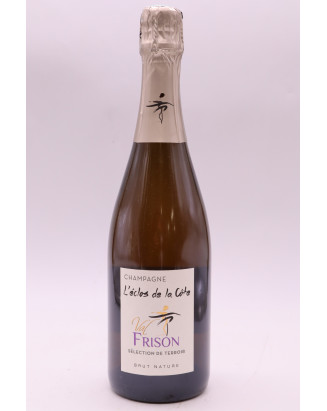
L'Éclos de la Côte Brut Nature: another expression of chardonnay in a range devoted almost entirely to pinot noir. This single-parcel cuvée offers fine bubbles, pronounced minerality, and great finesse. Fermented and aged in wood like the rest of the wines, it combines vinous complexity with saline tension. Produced in very small quantities.
Traverse Brut Nature: an even rarer cuvée, noted for its fine vinous complexity. It carries forward the house style, balancing ripe fruit, a silky texture from barrel aging on lees, and a sharply mineral finish. Serve in a wine glass with poultry or an aged cheese such as Chaource, a regional specialty.
Elion Brut Nature: the estate's rosé, a rare cuvée made from Ville-sur-Arce pinot noir, with abundant fruit and character. Like the rest of the range, it has no dosage, favoring vinous character and depth of red fruit over lightness, in the style of the Côte des Bar's food-friendly rosés.
Chut Libre: a longstanding house cuvée, recognizable by its label, which is distinctly different from the others. Produced in very limited quantities, it reflects the freedom Valérie Frison occasionally allows herself in winemaking and remains highly sought after by collectors of natural champagnes.
COLLECTION NEAR PARIS & VAT REFUND FOR TOURISTS
Free collection in our warehouse near central Paris (92)