Personalise your experience
Change your country, language and currency here whenever you wish.
|
|
|
Must-See Châteaux |
|
|
|
|
|
|
|
|
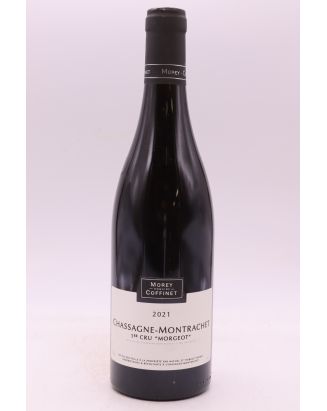
Nestled in the heart of Chassagne-Montrachet, in the prestigious Côte de Beaune in Burgundy, Domaine Morey-Coffinet is today one of the most sought-after addresses by lovers of great white and red Burgundy wines. Spread over approximately 8.5 hectares of carefully selected vines, this family estate produces around fifteen white cuvées and a handful of red wines of remarkable finesse.
The story of Domaine Morey-Coffinet begins in the late 1970s, when Michel Morey, son of the renowned winegrower Marc Morey, joined his life with Fabienne Coffinet, a descendant of Fernand Coffinet. Both families had deep roots in Chassagne-Montrachet. Their marriage gave rise, around 1978–1980, to a vineyard built on the combined legacy of two exceptional winegrowing estates. With a strong foundation in premier crus, Michel and Fabienne gradually established the estate’s reputation through the quality of their terroirs and their meticulous cellar work.
Around the turn of the 2000s, their son Thibault joined the estate and brought new energy. Passionate, curious, and deeply committed to working in harmony with nature, he took full charge in 2009 and set a decisive transformation in motion. Under his leadership, the estate began converting to organic farming in 2014, obtained organic certification in 2018, and then adopted biodynamic principles across all its plots. Today, father and son continue to uphold a tradition of passing on their knowledge and pursuing excellence that is the strength of Domaine Morey-Coffinet.
The Domaine Morey-Coffinet vineyard covers 8.5 hectares across several prestigious Côte de Beaune appellations, primarily around Chassagne-Montrachet. Around 5.5 to 6 hectares are planted with Chardonnay, and the rest with Pinot Noir. All the soils are systematically plowed, a rare and demanding practice that reflects the estate’s commitment to the vitality of its soils.
In Chassagne-Montrachet, the estate has plots in some of the village’s most renowned premier crus: En Cailleret (0.65 ha across two complementary plots, at elevations of 285 to 300 meters, with clay-limestone soils), La Romanée (one of Chassagne’s rarest crus, barely 65 ares, directly neighboring Montrachet), Blanchot-Dessus (a terroir of exceptional mineral depth, neighboring Bâtard-Montrachet), Dent de Chien (a subtly elegant cru with notes of lemon and ginger), and En Remilly. The estate also owns vines in Puligny-Montrachet, notably in the legendary premier crus Les Pucelles and Les Combettes, two terroirs of incomparable finesse and complexity on the doorstep of the grands crus. Finally, at grand cru level, the estate farms a 13-are plot of Bâtard-Montrachet planted in 1996 on the Chassagne side, and has access to Corton-Charlemagne from young, east-facing vines on gray marl soils above Ladoix.
The estate’s soils, predominantly clay-limestone with variations in marl from plot to plot, give the wines their dual signature: power and minerality on one hand, freshness and aromatic finesse on the other.
The cellar at Domaine Morey-Coffinet is where its terroir-focused philosophy takes shape. Thibault Morey makes wine there as naturally as possible, responding to the character of each vintage. Fermentation takes place with native yeasts, without the use of commercially produced yeasts, allowing the grapes and their place of origin to express themselves authentically.
Sulfur use has been drastically reduced over the years. Thibault no longer uses it at harvest, preserving the purity of the aromas and the wine’s vitality. Aging takes place in oak barrels of different sizes—228, 350, and 400 liters—with the proportion of new oak tailored to each cuvée and vintage (30–35% for the premier crus and 50–60% for the grands crus). This careful adjustment adds complexity without ever overwhelming the fruit or masking the terroir.
Under Thibault, aging periods have gradually lengthened, allowing the wines to develop their full depth before bottling. The finest cuvées are not filtered, preserving their natural density and texture. The result: wines that strike a remarkable balance between richness and tension, fruit and minerality, generosity and freshness. Wines described as “alive,” both hedonistic and precise.
Chassagne-Montrachet 1er Cru En Cailleret: From two complementary plots with clay-limestone soils, aged for 15 months in barrels, 35% of them new, this premier cru has a deep golden color and a bouquet of flint, white flowers, white fruits, and hazelnuts. The palate is powerful and creamy, with mineral tension and toasted, honeyed, and fruity notes. A wine of character with aging potential.
Chassagne-Montrachet 1er Cru La Romanée: One of Chassagne’s rarest and most sought-after crus, covering just 65 ares in total. On this terroir directly neighboring Montrachet, the rock sets the tone: smoky, toasted notes, ripe stone fruits (peach and apricot), pineapple, pear, and passion fruit. A wine of extraordinary depth that will reward long patience in the cellar.
Chassagne-Montrachet 1er Cru Blanchot-Dessus: From an exceptional terroir neighboring Bâtard-Montrachet, this premier cru displays uncommon mineral intensity. Dense and full of fruit and earthy character, with remarkable depth. In great vintages, it approaches grand cru stature.
Chassagne-Montrachet 1er Cru Dent de Chien: This climat produces a wine of distinctive finesse: notes of lemon, ginger, and flowers, with a surprising richness perfectly balanced by fresh, persistent minerality. Elegance and precision define this appealing cru.
Chassagne-Montrachet 1er Cru En Remilly: Located in the south of the appellation, this premier cru has a restrained nose that opens with finesse, followed by an elegant, well-structured palate. A refined wine worth waiting a few years for.
Puligny-Montrachet 1er Cru Les Pucelles: This legendary premier cru on the doorstep of Montrachet reveals the full extent of Thibault Morey’s talent: a wine at once concentrated and airy, with luscious fruit and exotic accents, imbued with the graceful freshness of small white flowers.
Puligny-Montrachet 1er Cru Les Combettes: This terroir bordering Meursault-Charmes produces a wine of many nuances: floral delicacy, luscious, buttery fruit, and shimmering minerality. Expressive, complex, and exceptionally refined. A fine demonstration of the estate’s mastery of Chardonnay.
Bâtard-Montrachet Grand Cru: From a tiny 13-are plot planted in 1996 on the Chassagne side of the grand cru, this wine sits at the pinnacle of the estate’s white wines. Clay-limestone soils, ideal sun exposure, and 16 months of aging in 350-liter barrels with 50% new oak all contribute to a wine of extraordinary power and complexity. It has a golden color and a bouquet of white fruits, poached pear, exotic fruits, citrus zest, fresh almond, toasted hazelnut, and chalk. The palate is dense and creamy, with smoky minerality of remarkable depth.
Corton-Charlemagne Grand Cru: The estate’s second white grand cru comes from east-facing vines above Ladoix, on gray marl soils. This Corton-Charlemagne shows lovely drive, propelled by vibrant fruit, deep mineral energy, and subtle, perfectly integrated oak. Notes of fresh fruit, a touch of lime, and the smoky character typical of this grand cru. A wine with exceptional aging potential.
Corton Grand Cru (red): The estate’s third grand cru and its only red grand cru. Made from Pinot Noir grown on Corton’s powerful soils, this wine has a generous, muscular, aromatic profile, with notes of roasted red and black fruits, a silky texture, and remarkable balance. A fine red wine built to age, showcasing the estate’s mastery of Burgundy’s two quintessential grape varieties.
COLLECTION NEAR PARIS & VAT REFUND FOR TOURISTS
Free collection in our warehouse near central Paris (92)