Personalise your experience
Change your country, language and currency here whenever you wish.
|
|
|
Must-See Châteaux |
|
|
|
|
|
|
An essential in Biodynamics on the lands of Pauillac - Fifth Grand Cru Classé
Château Pontet-Canet, a true icon of the Médoc, stands out for its commitment to nature and its ancestral expertise. Located in the heart of Pauillac, this wine estate is a pioneer of biodynamic and organic farming, producing wines of exceptional purity, appreciated by connoisseurs the world over.
Founded in the early 18th century by Jean-François de Pontet, governor of the Médoc and grand equerry to the king, Château Pontet-Canet has endured through the ages, retaining a unique character within the Bordeaux vineyard. Originally, Pontet brought together several plots in Pauillac, in a place known as Canet. A few decades later, his descendants continued the expansion of the adjacent vineyards, forging the renown of this property.
The château quickly gained prestigious recognition. In 1855, it was classified as a Fifth Grand Cru in the famous Médoc wine classification, confirming its place among the Bordeaux viticultural elite. In 1865, Herman Cruse, an influential merchant, acquired the estate, modernized the facilities, and brought Pontet-Canet's wine to international renown. The Cruse family would remain its owner for 110 years, before selling the estate in 1975 to Guy Tesseron, a cognac magnate. Since then, the Tesseron family, with Alfred Tesseron at its helm since 1994, has continuously elevated Pontet-Canet to the pinnacle of Médoc wines, leading a true revolution in the way of cultivating and vinifying.
Under the leadership of Jean-Michel Comme, technical director for 30 years, the château was one of the first classified growths to transition to biodynamic farming. This decisive turning point allowed the estate to reconnect with natural practices, while strengthening the quality and identity of its wines. Today, Justine Tesseron, Alfred's daughter, ensures the continuity of this family venture, while bringing a modern touch.
The 2010 and 2009 vintages of Château Pontet-Canet are rated 100/100 by Robert Parker, while the 2016 and 2018 vintages reach 98/100, celebrating the richness and depth of this grand cru.
The 81 hectares of vines at Pontet-Canet are ideally situated within the renowned Pauillac appellation, neighboring the prestigious châteaux Mouton Rothschild and Lafite Rothschild. The terroir, located on the left bank, is distinguished by its diversity and richness, spread across around one hundred different plots.
The heart of the vineyard rests on the "Plateau", a ridge of Günz Garonne gravels, a lean and well-drained soil, perfectly suited to the emblematic grape variety of the region: Cabernet Sauvignon. Representing more than 60% of the grape variety mix, this grape variety imparts structure and longevity to the wines of Pontet-Canet. Some vines, over 50 years old, plunge deep into the limestone soil, producing the finest grapes on the estate.
At the edge of the estate, other plots closer to the river feature clay-limestone soil. This cooler, more fertile land is ideal for Merlot, which accounts for approximately 30% of the grape variety mix. Merlot brings roundness and suppleness to the wine, balancing the power of Cabernet Sauvignon. Petit Verdot (2%) and Cabernet Franc (4%) complete the blend, offering spiced and floral nuances to the wine.
This plot-by-plot approach, combined with manual vine management, allows each vine to express itself fully. Since 2008, draft horses, such as Percherons, have replaced tractors to avoid soil compaction, promote biodiversity, and preserve the natural balance of the vineyard.
Vinification at Château Pontet-Canet is based on a philosophy of respect for the terroir and interventionist minimalism, a key principle of biodynamics. The entire vineyard has been certified in organic and biodynamic farming since 2010, following several years of successful experimentation. The estate aims to express the essence of the terroir through its wines, while limiting the use of chemicals and relying on manual practices.
The harvest is carried out manually, with a rigorous sorting of the grapes, which are then transferred by gravity into small conical vats for precise plot-by-plot vinification. This process respects the integrity of the fruit and extracts the best from each plot.
The aging of the wines lasts between 16 and 18 months, depending on the vintage. Half of the production is aged in new barrels, while approximately 30 to 40% of the wines are aged in concrete amphorae (dolia), a practice introduced in 2012. These amphorae, made from local materials (gravel and limestone), allow for natural micro-oxygenation of the wine, preserving its purity and balance without artifice. The remainder of the wines is aged in "one-wine" barrels for a more subtle aging process. This process imparts remarkable depth and precision to the wines of Pontet-Canet.
Château Pontet-Canet offers a single main cuvée, drawn from the entire production of the vineyard, following the decision to no longer produce a second wine. This approach ensures that all the estate's efforts are devoted to producing a single fine wine, which reflects the diversity and richness of the estate's terroirs.
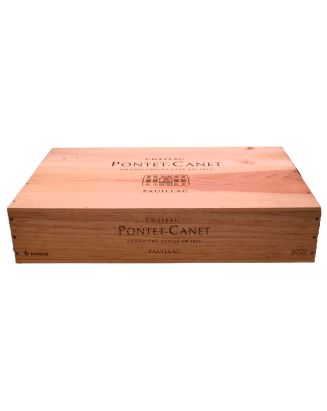
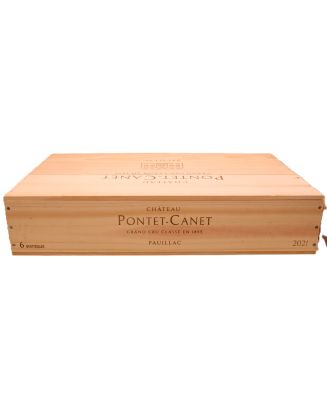
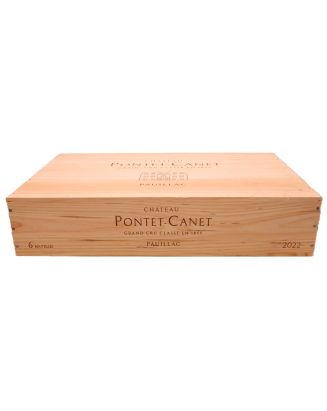
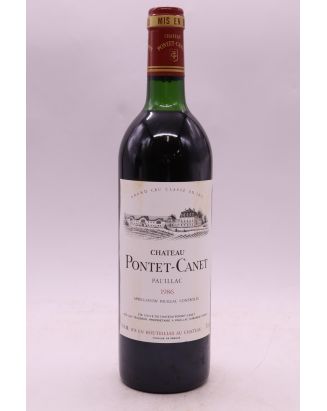
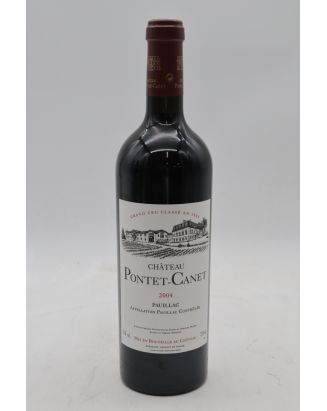
Château Pontet-Canet - Fine Wine
This wine is the jewel of the estate, born from a blend dominated by Cabernet Sauvignon (approximately 62%), complemented by Merlot (32%), Cabernet Franc (4%), and Petit Verdot (2%). The fine wine of Pontet-Canet is known for its restrained power, its impressive tannic structure, and its incredible elegance. On tasting, it reveals complex aromas of dark fruits, spices, and graphite, with a silky texture and a long mineral finish. Its aromatic purity is a direct reflection of the biodynamic work, allowing the terroir to express itself fully, vintage after vintage. It is a wine for ageing par excellence, capable of evolving magnificently over several decades.
Pauillac, one of the most prestigious appellations in the Médoc, is part of the great wines of Bordeaux, with remarkable vintages that have marked history. Among the finest vintages are those of 1975, 1982, 1985, 1986, 1989, and 1990, celebrated for their complexity and longevity. The years 1995, 1996, 2000, 2003, 2005 are also distinguished by their richness and power. More recently, the vintages 2008, 2009, 2010, 2012, 2014, 2015, 2016, 2017, 2018, 2019, and 2020 have confirmed the exceptional potential of Pauillac, offering wines that are both elegant and powerful, perfect for long ageing.
The Fifth Grands Crus Classés offer a fine diversity of properties in the Médoc, bearing witness to the viticultural expertise of Bordeaux. In Pauillac, one finds renowned estates such as Château d'Armailhac, Château Batailley, Château Clerc Milon, Château Croizet-Bages, Château Grand-Puy Ducasse, Château Grand-Puy-Lacoste, Château Haut-Bages Libéral, Château Haut-Batailley, Château Lynch-Bages, Château Lynch-Moussas, Château Pedesclaux, and Château Pontet-Canet. In the Haut-Médoc, Château Camensac and Château Cantemerle stand out for their distinctive characteristics. In Margaux, Château Dauzac and Château du Tertre bring a touch of elegance, while Château Cos Labory from Saint-Estèphe completes this prestigious selection. Each of these estates reflects a unique facet of the Bordeaux terroir.
Château Pontet-Canet stands today as one of the great names of Bordeaux, admired for its audacity and ecological commitment. By drawing on ancestral methods while integrating modern innovations, the estate has been able to produce wines of exceptional quality, combining finesse, depth, and character. With meticulous attention paid to every stage of production, from vine cultivation to aging in amphorae, Pontet-Canet distinguishes itself through a nature-respecting approach and unrivalled expertise.
COLLECTION NEAR PARIS & VAT REFUND FOR TOURISTS
Free collection in our warehouse near central Paris (92)